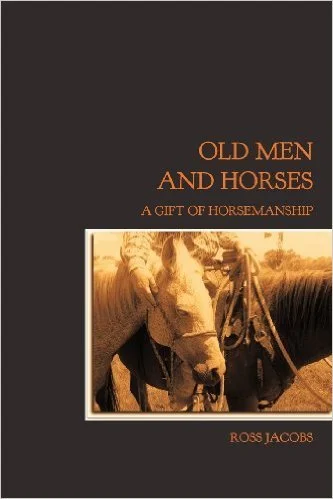
This is a chapter from my book, Old Men and Horses. The books (Old Men and Horses, and Changing The Tide) contain a series of short stories about my path to horsemanship under the guidance of two old men who were twin brothers, Walt and Amos. The Walt and Amos books can be purchased through my web site https://www.goodhorsemanship.com.au/books
________________________________
When I was a kid I was an avid reader of all books concerned with riding and horsemanship. Later on I made a point of studying the ways of as many horsemen I could find. It was and is an obsession of mine. One of the things that always interested me was not only the similarities between the best riders and trainer, but the difference as well. I started to wonder if it was possible for two people to ride and train horses very differently and still be equally great horse people? As I got older and learned more of the wisdom of Walt and Amos I began to understand that truly great horse people don’t subscribe to methods or a system because they had learned the importance of ‘feel’ and what it means to work with the inside of the horse. They are people who understand the restrictions and limitations of a structured system when it comes to educating horses. The best horse people have a philosophy that does not waiver, but they have ways of doing things that waiver all the time – from horse to horse and moment to moment.
With this discovery I thought I had found the secret to becoming a truly great horseman. I figured that as my ‘feel’ and timing improved I was on the way to becoming as good a horseman as the best of them – including Walt and Amos. Alas, this was not true. My skills did improve and my ability to handle the more difficult horses was steadily growing. In fact, I got quite a bit of work from people who had heard how I fixed so-and-so’s horse problem or how good a job I had done breaking in a horse for some people whose daughter went to school with their girl. I liked the work. I really liked the money and I also like the notoriety. It got to the stage that I figured that Walt, Amos and I were like the three amigos. Looking back on it, I realize how foolish and stupid I was. But mixing my age and experience at the time with a little bit of ego and flattery from others and you get a stupid, foolish teenager.
Fortunately reality did not come as a rude crashing to earth for me. I didn’t embarrass myself in a way that would traumatize me for life and have me living in a cave by myself for the rest of my days. Rather it came from wanting to be like Walt and Amos. Spending as much time as I could with these two old men taught me that not only were they able to train horses for any task that was required, but they were also able to achieve a friendship and mutual respect with their horses. This showed itself in ways that were only visible if you looked carefully for them. The way a timid and nervous horse got braver and calmer under the tutelage of the brothers. The sour horse that was always snitchy when asked to go forward would soften his thoughts when guided by the old men. The horses that had fear of people would melt to the touch of Walt or Amos. I wanted to know the secrets to these things. What made these cranky and wizen old men from a generation that thought talking films were wondrous, not just horse educators but horse therapists? I wanted to know.
“Amos, what do you reckon you need to have to be a really good horse person,” I asked?
“Well matey, I ain’t had time to think about it. You ask a hard question there. I guess you need lots of things.”
“Well Amos, what do you think is the most important thing?”
“Well matey, let me ask you somethin. That pony that ya was workin for that lady last week. Did ya like him?”
“Yeah, he was a nice horse. Nothing special, but polite and had a try in him once I showed him that “no” was not the right answer,” I said.
“How did ya know that “no” was not the right answer, matey?”
“What do you mean, Amos? Of course he had to learn that he had to go into the float. That’s what he was here for,” I said.
“Yep matey, that’s what he was here for. But do ya know the difference between a good horse trainer and a great horse trainer?”
“What,” I asked?
“You take Walt as an example, matey. Do ya know why he is about the best horsemen ya ever goin to see in ya life? No, of course ya don’t. Ya don’t know enough yet. The secret is that he don’t think he is any better than any horse. He respects ‘em in a way you or I or anybody around here can never understand. Walt don’t put ‘imself above any horse. When he works with a horse he’s workin with a friend on the same footin. He ain’t treatin ‘em like a dumb animal. Walt believes with all his heart that every horse is just as smart, just as good and just as deservin of the same respect as he is. It ain’t just words for him – he knows it’s true. That’s why he is so good with horses, matey.”
“But Amos, don’t ya need to be a leader and make the right thing real easy and the wrong thing more difficult? I mean that’s what you and Walt have taught me.”
“Sure matey. A horse needs leadership and how to get along with people that’s safe and proper for both. But matey, if I was to teach ya how to play chess would it be right for me to think I’m better than ya because I know the rules and you don’t? I wouldn’t be better than ya and a person ain’t better than a horse just ‘cause the horse don’t know how to go on the float.
And ya know what matey? If I respected ya as an equal do ya think I would be a better teacher than if I tried to show ya how to play chess with me actin all superior and smug? What Walt has in his heart with how he feels about horses gives him somethin that the rest of us won’t ever get by just practicin to ride and train them. He has an advantage that ya can only get by makin changes to how ya feel. That’s pretty special.”
“Amos are you telling me that Walt is a better horseman than you?”
“Maybe matey, but I ain’t jealous because I got all the good looks in the family.”
What Amos had to say gave me a lot to think about. It got me re-evaluating how I had approached the problem with the pony. It later occurred to me that maybe I should get Walt’s input on what elements go into making somebody a great horse person.
“Well matey, there’s a whole lot of things that are important if ya is to become the best ya can be. But ya know what I reckon sets the good from the great? Ya gotta love them. Ya gotta love horses.”
“Well I think most of us love horses, Walt. Otherwise we would be riding bikes,” I observed.
“No matey. Most of us only love horses with conditions attached. Most of us love horses because we love to ride or because they are so beautiful or because they win ribbons for us or because we love the feelin of being in control of somethin so big and strong. Not too many folk love horse for what they are. Who loves the ugliest horse in the country or who loves the horse that attacks them when they walk into the paddock or the horse that nobody else wants. The sort of love that comes from inside a person because that’s the sort of person they are is rare to find. That’s why Amos is better with any horseman you’ll ever see. He loves them for what they are. He don’t care much about what they can do or will do or look like. He loves them with no conditions. Every damn one of them! And somehow, in a way that I ain’t ever understood, they know it and he gets somethin special from them. I guess it’s because the role he takes in their life is a leadership they understand best. I don’t know how a horse would explain it, but I reckon it is somethin like for us a parent would act. Ya mum and dad matey love ya with no conditions and ya know it. This makes their role in ya life special above anybody else. Ya respond and respect them in a way that is different from the way ya are with anybody else. That’s how it is for Amos and the horses. He’s got all the skills, the awareness, the timin, the feel and all the things they other good horse people have, but he’s also got this special love for them which makes the results you and I get look ordinary. But ya know matey, I don’t mind too much because when the ladies are around it’s usually me they have got their eye on. Poor Amos got stuck with his ugly mug, so I figure he and I are about even in life’s luck.”
I walked away stunned. Did each brother know how much respect the other had for them? I had never heard anything but jibs from one about the other. But here they were expressing their awe at the others horse skills! But what was even clearer was their observation that apart from the obvious technical skills that a person needs to have to be good with horses, there was an inner love and respect for all horses that one needs in order to be the best you can.
And what about humility? Each brother recognized something special in the other, but didn’t see it in themselves. They each described a deep love and respect for the horse. But to have such an inner feeling for horses must require a high degree of humility in the person. How humble must a person be to not put themselves above a horse? I have only seen this in maybe one or two other people in my life. It’s a very rare gift. How does one achieve such humility? This was something that was missing from my understanding. I have no idea if I am getting any better with this aspect of horsemanship. I find at times I have to remind myself to be respectful and love the horse for what he is, which I guess means I have more work to do.
Finally, the other major observation I made from my conversation with the two brothers is that they were not perfect – they did get some things wrong. There was no argument that I was the best looking fellow on the place!