When a person gets the itch to have a horse and learn about horses and how to ride, the first thing they do is take riding lessons. They are excited to learn how to saddle a horse, mount a horse, hold the reins, sit correctly, and make it go, turn, and stop. When they can ride a walk, trot, canter, and gallop, they feel they are on their way to being a horse person. When they can safely go for trail rides alone or with friends, jump over logs and open gates from horseback, they are on their way to being a good horse person. And when they can do all those well and even add more difficult and demanding movements to their repertoire, they are on their way to being competitors in the discipline of their dreams. Well, that’s at least how my horse journey started for me.
Then people began asking me for help with their horses. I was exposed to an entire new world of crazy horses. I had to sit on horses that didn’t want me on their back or couldn’t stand still when I saddled them, or refused to walk into a trailer, or would only come out of a trailer with an explosion. Something was wrong with horses like this because my riding horse didn’t behave like that. That’s why I knew it couldn’t be my fault. It had to be that these horses were messed up because they had not met the superior skills and talent that I offered.
However, necessity dictated that I go in search of answers. This is when I learned about groundwork and all its magical powers. Why didn’t somebody tell me before that it was not enough that a horse just led, but the importance of the quality of how well it led was key to so much of getting along with and training horses? Groundwork brought about a major change in my horsemanship. I was now a horseman and not just a rider.
People started to notice the change in me, and I was asked to start some horses for friends. I was averaging about 3 weeks to break a horse in to ride. If it took less time, I knew I was getting even better as a horseman. I thought I was a horseman before this, but now I knew I was becoming a “true” horseman.
It took a while for me to realise something was wrong with how I was training horses for riding. People were calling weeks and months after their horse went home, complaining about behavioural problems they were having with them. Several said their horses had become hard to catch. Some refused to accept a bit in their mouth. Others had developed spooky behaviour that was never evident before.
I put it down to bad handling and riding by the owners because I didn’t have these problems. But over time, I came across horses that I struggled to have answers for. My abilities and qualifications that made me a “true” horseman were not always enough. I began to question what was I missing.
Then, with the help of better horse people than me, I came across the concept of directing a horse's thoughts and the influence this had on their emotions, focus, and understanding. Wow! It was cathartic. I realised I had been training horses to be obedient and totally missed out the part about having a partnership with a horse. I had simply been teaching them to do what to do to avoid trouble. But now I was learning I could change their thoughts and emotions so they were invested in making working with me work out as a positive experience for both of us.
Had I finally found the key to making me a “true” horseman?
I learned to ride. I learned the importance of brilliant groundwork. I learned how to direct a horse to do advanced movements. I learned the importance of directing a horse’s thought before directing their movement. I am constantly working at getting better at all of these skills. But is there anything new to learn? Am I now a “true” horseman?
Have I now graduated to be in the fraternity of “true” horsemen. I have a strong suspicion there is a horse coming to a clinic in the near future that will make me realise what else I am missing. At least I hope there is.
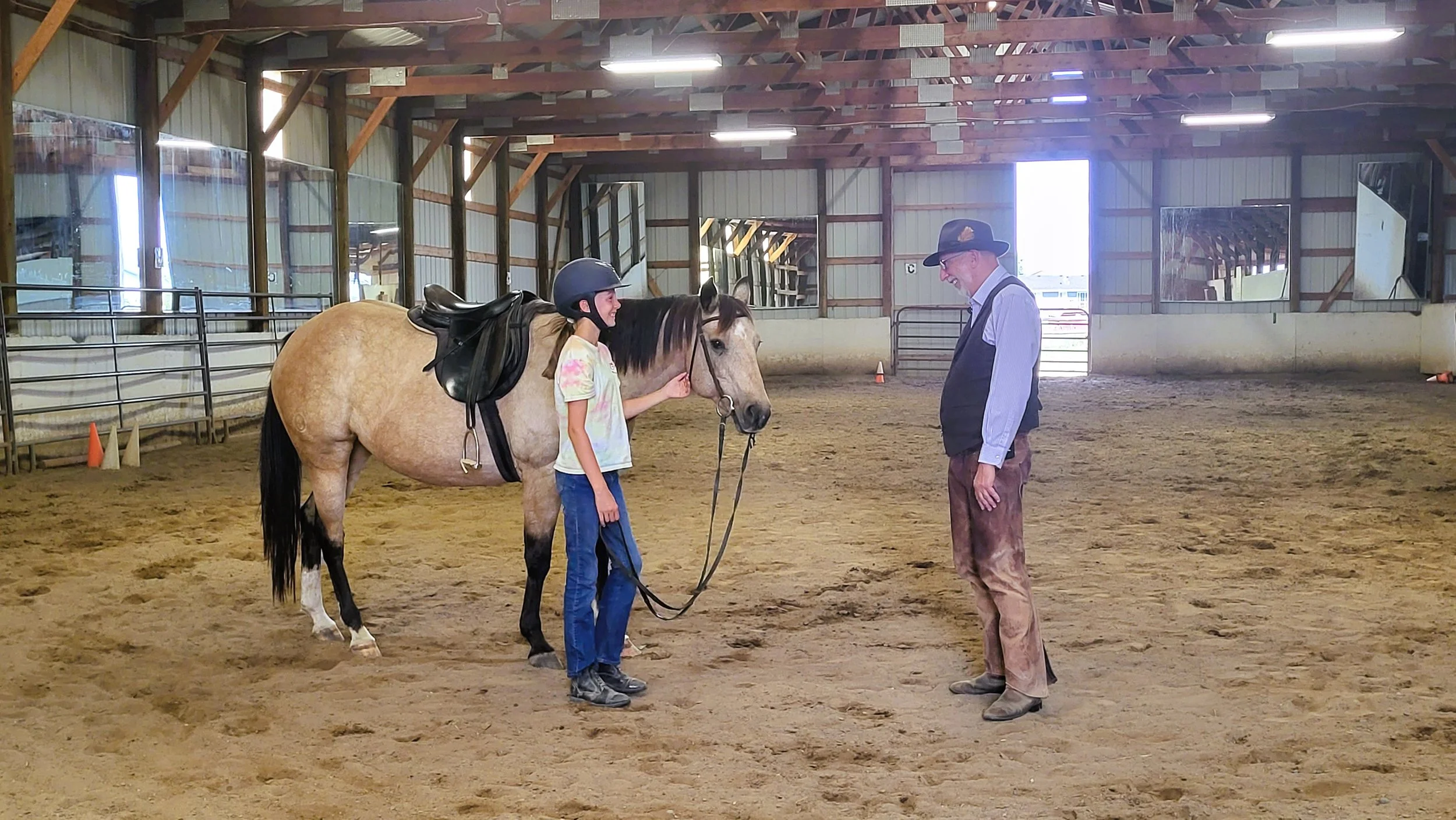
Caroline and I are both on the road to being horseman