
Have you ever had a friend who you felt was in a bad relationship and wanted to tell them your concerns?
If so, welcome to the life of a professional horse trainer.
Every professional has had clients whom they truly believed were never going to get along with their horse. Sometimes, the relationship between horse and owner was just not fun and never would be fun. And sometimes the relationship is toxic and outright dangerous. But whatever the case, every trainer has experienced clients who they were certain that no amount of help and training was going to turn a bad relationship into a good one.
Having the conversation with a client about your concerns is one of the hardest jobs any trainer has to perform. It’s the cause of many sleepless nights.
Most people send a horse for training because they are having problems. But despite the problems, their love for their horse makes the commitment of time and money worthwhile. Most are confident that getting the right help will make their dream of the perfect horse come true. And this is true for most people. However, it is a hard pill to swallow when your trainer tells you they believe what your dream horse needs and what you can offer is not a good match. They strongly believe you’ll never have a good partnership and you’ll probably never be able to trust each other.
In my experience, people only accept their horse is the wrong horse for them when they have already come to that conclusion themselves. Almost nobody accepts such a hard truth just because they were told that by another person. They need to have come to that realisation themselves.
Fortunately for me, those types of conversations are far fewer since I changed careers from a full-time trainer to a full-time clinician. Nevertheless, I’ve had many discussions with trainers who have asked me how they should approach telling a client they have serious concerns about a client's horse being unsuitable or even dangerous. I wish I knew the the best answer.
Have any of you had that discussion with your trainer or had to come to the decision of finding a more suitable home for your dream horse? If you were a trainer, how would you explain your doubts to a client in a way they would take your concerns seriously? What red flags would you need to decide that you and your horse were not a match for long-term happiness?
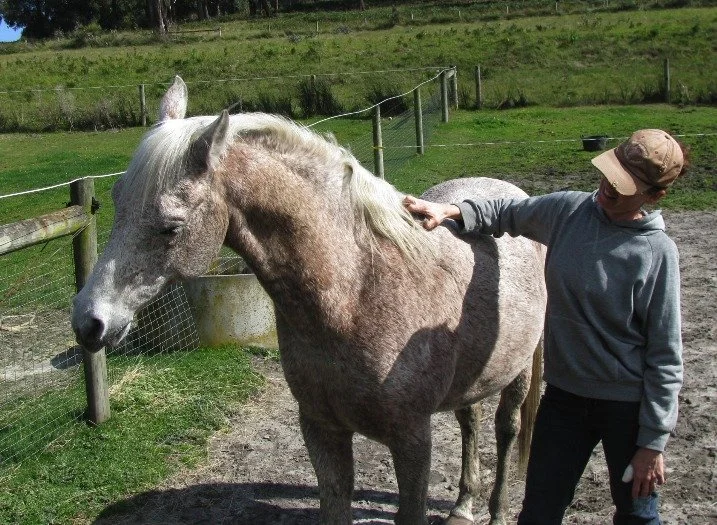
My wife, Michèle with one of her dream horses, Guy.